 Travel baseball has never offered more opportunities. There are more tournaments, more showcases, more rankings, more social media highlights and more recruiting services than ever before. Yet many players are less developed than previous generations.
How can both be true?
The answer is simple: We have confused exposure with development.
The Three Mindsets
When it comes to player development, I see three common mindsets among athletes and families.
1. Wait and See
This mindset is built on hope and luck.
The player shows up to games, tournaments and showcases hoping someone notices them.
The challenge is that when success comes, they often do not understand why it happened. And when failure comes, they do not know what to fix.
Their plan is to hope.
Their strategy is to wait.
Their development is left to chance.
2. Work and Do
This mindset is built on effort and activity.
The player is busy.
They attend practices.
They play games.
They take batting practice.
They travel every weekend.
They work hard.
The problem is that activity alone does not guarantee improvement.
A player can spend years practicing the wrong things.
Being busy is not the same as getting better.
3. Train and Become
This mindset is built on development and mastery.
The player has a deliberate plan.
Every drill has a purpose.
Every repetition has a reason.
Every failure provides feedback.
The goal is not simply to play baseball.
The goal is to become the type of player capable of succeeding at the next level.
This is where true development occurs.
What Is Development?
I define development as: The deliberate effort to value and empower learners to obtain personal mastery and excellence through nurturing training.
Development is not accidental.
Development is intentional.
Development requires patience, structure, accountability and repetition.
Most importantly, development requires training.
Talent, Habits and Skills
One of the greatest misconceptions in youth sports is believing that talent alone is enough.
It is not.
Talent: Talent is what you do well.
A talented player may have a strong arm, quick hands or natural athleticism.
Talent gets attention.
Habits: Habits are what you do well repeatedly without thought.
Habits are developed through consistent repetition.
What was once difficult becomes automatic.
Skills: Skills are what you do well repeatedly without thought while under stress.
Anyone can perform when conditions are perfect.
The best players perform when the game is on the line.
Pressure reveals whether talent has become a habit and whether habits have become skills.
The AI Lesson
The conversation around Artificial Intelligence (AI) offers an important lesson for sports.
Many educators have expressed concern that students may become overly dependent on AI tools, using them to avoid thinking rather than enhance thinking.
The concern is not the technology.
The concern is avoiding the struggle required for growth.
Learning happens through effort.
Growth happens through challenge.
Mastery happens through repetition.
The same principle applies to baseball.
Showcases are not the problem.
Tournaments are not the problem.
Recruiting services are not the problem.
The problem occurs when players use opportunities as a substitute for development.
Just because a player attends 20 showcases does not mean they became 20 times better.
Opportunities cannot replace training.
Education, Experience and Expertise
I often explain development through a simple framework:
Education + Experience = Expertise
- Education: Learning what I need to learn.
- Experience: Doing what I need to do.
- Expertise: The combination of knowing and doing repeatedly over time.
From there:
- Expertise + Reflection = Knowledge
- Knowledge + Action = Power
Many young athletes are gaining experiences.
Far fewer are gaining expertise.
The Truth About Exposure
Exposure has value.
But exposure is not development.
A showcase reveals talent.
Training develops talent.
Competition tests talent.
Development transforms talent.
Twenty years ago, opportunities typically followed development.
Today, many families pursue opportunities instead of development.
Yet the truth remains unchanged.
Talent gets noticed.
Habits create consistency.
Skills survive pressure.
Development produces all three.
The families who understand this will not simply raise better baseball players.
They will raise better learners, better competitors and ultimately better people.
Remember: Intelligence tops being smart.
For more information, visit www.diamonddirectors.com today.
If you found this inspiring and thought-provoking, or if you have any questions, comments or concerns, add me on Discord and let’s go deeper.
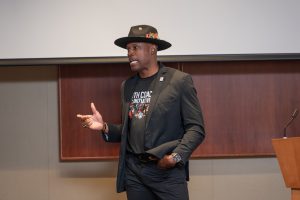
C.J. Stewart has built a reputation as one of the leading professional hitting instructors in the country. He is a former professional baseball player in the Chicago Cubs organization and has also served as an associate scout for the Cincinnati Reds. As founder and CEO of Diamond Directors Player Development, C.J. has more than 22 years of player development experience and has built an impressive list of clients, including some of the top young prospects in baseball today. If your desire is to change your game for the better, C.J. Stewart has a proven system of development and a track record of success that can work for you.

Leave a Reply