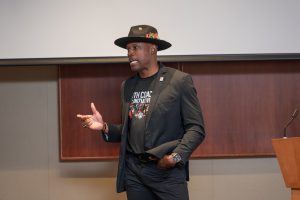
 I am 50 years old, and when I think about the next 10 years, I don’t just think about where sports are going. I think about where the world is going.
By 2036, our country and our communities will look and operate differently. Technology will continue to change how we communicate, learn, travel, work, compete and build relationships.
That shift should create tremendous opportunity. It will also create tremendous challenges.
Sports, and baseball specifically, can play an important role in helping people stay connected through that change.
That’s why I believe the coach of the future will be one of the most important leaders in our communities.
And we need to start preparing that coach now.
Baseball Has Always Been Bigger Than Baseball
Baseball offers an interesting lens through which to view our future. The Knickerbocker Base Ball Club established an influential set of rules in 1845, and the game continued evolving and becoming standardized throughout the 1800s.
What began as an American game eventually traveled far beyond America. Today, baseball belongs to the world. Players from Latin America, Japan, Canada and elsewhere don’t simply participate in American baseball. They excel at its highest levels.
That matters. Because baseball can become more than a competition between cultures. It can become a classroom for cultures.
A baseball team requires people with different backgrounds, personalities, strengths and perspectives to pursue one common objective. The question is whether coaches will be prepared to lead them.
We Need a Better Definition of Coach
The word coach originally referred to a carriage, a vehicle designed to carry people from one place to another. Eventually, the word became associated with tutors who helped carry students toward academic achievement. Later, it became connected to athletics.
That history matters to me.
A coach helps people move.
From where they are to where they are capable of going.
That’s why I define COACH this way:
C: Cultivating Growth
O: Creating Opportunities
A: Advancing Progress
C: Building Confidence
H: Harmonizing a Shared Journey of Learning
That definition creates accountability.
Because if you aren’t intentionally cultivating growth, creating opportunities, advancing progress, building confidence and harmonizing a shared journey of learning, what exactly are you coaching?
Running practice doesn’t automatically make someone a coach.
Wearing team gear doesn’t make someone a coach.
Knowing baseball doesn’t make someone a coach.
Coaching is serious work because developing human beings is serious work.
The Title Coach Must Mean More
We would never allow someone to call themselves a doctor simply because they know a lot about medicine. We wouldn’t call someone a lawyer because they enjoy debating.
Yet, in sports, we often hand someone a team, a practice plan and the title Coach with very little examination of whether that person possesses the competencies necessary to develop human beings.
I don’t believe that will be good enough in 2036. The coach of the future will need specialized training. Perhaps coaching will never require the licensing process of medicine or law, but I believe credible certifications, competency assessments and continuing education should become increasingly important.
Because coaches aren’t merely teaching people how to hit, throw, run or win.
They are influencing identity.
Confidence.
Relationships.
Decision making.
Emotional regulation.
Character.
Future opportunities.
That’s too important for Coach to simply be a nickname.
The 10 Competencies of the Coach of 2036
1. Technical Competency
You must know your sport deeply enough to diagnose problems, teach solutions and produce repeatable improvement.
2. Communication Mastery
Communication won’t simply mean talking clearly. Coaches must know how to communicate across generations, cultures, personalities and learning styles.
3. Counseling Skills
Coaches don’t need to become therapists, but they must learn how to listen, ask questions, manage themselves, withhold judgment and recognize when advice is and isn’t needed.
4. Cultural Competency
Sports will continue becoming more global. Coaches must understand, respect and effectively lead people whose backgrounds and experiences may be different from their own.
5. Trauma Informed Practice
Behavior communicates something. Coaches must learn to recognize what may be happening beneath performance rather than simply labeling athletes as lazy, soft, disrespectful or unmotivated.
6. Technology Fluency
Artificial intelligence (AI), data, biomechanics, wearables, video analysis and technologies we haven’t even imagined yet will change player development. The coach doesn’t have to compete with technology. The coach must know how to use it without losing the human relationship.
7. Advocacy
Coaches must create access, open doors, build networks and speak up when athletes don’t yet have the power or proximity to advocate effectively for themselves.
8. Accountability for Outcomes
If families are being asked to buy now, coaches should be able to explain what they are working toward by when.
Development requires assessment, planning, measurable progress and honest evaluation.
9. Adaptability
The coach of 2036 cannot use a 2026 solution simply because it worked before. Great coaches will constantly learn, unlearn and relearn.
10. Human Leadership
Technology may eventually perform much of the analysis coaches do today.
What technology cannot replace is a trusted human being who sees someone, believes in them, challenges them, holds them accountable and helps them understand who they can become.
Start Preparing Now
The coach of 2036 isn’t going to magically appear in 2036. That coach must start developing now.
Study communication.
Learn counseling skills.
Understand trauma.
Study culture.
Become technologically literate.
Learn how to assess people accurately.
Build development plans.
Measure outcomes.
Strengthen your emotional intelligence.
Learn how to advocate.
And most importantly, become comfortable being a student.
I am doing that myself. At 50, I am still studying, earning certifications and challenging what I thought I knew about developing people.
My wife, Kelli, and I have also developed Pedagogy for Pros, a trauma informed coaching certification housed at Georgia Highlands College.
Why? Because experience alone isn’t enough.
Experience must become expertise.
We Need Seers in Sports
I am a follower of Christ, and one of my spiritual gifts is prophecy.
I don’t understand prophecy simply as predicting what will happen next. I understand it as having the courage to see what may be coming, challenge what currently exists and call people toward what should be.
So when I look toward 2036, I see a coaching profession that must change.
I see coaches becoming educators, communicators, counselors, advocates and human development specialists. I see baseball having an opportunity to help bring people together during a period when technology and rapid change could easily pull people apart.
But opportunity doesn’t guarantee impact.
Preparation does.
The coach of the future cannot simply know the game.
The coach of the future must know people.
The coach of the future cannot simply run practices.
The coach of the future must produce development.
And the coach of the future cannot simply prepare athletes for the next game.
The coach of the future must help prepare people for the world they are going to inherit.
2036 isn’t far away.
2040 isn’t either.
The future athlete is already being born.
The question is: Are we developing the coaches who will be ready for them?
Remember: Intelligence tops being smart.
For more information, visit www.diamonddirectors.com today.
If you found this inspiring and thought-provoking, or if you have any questions, comments or concerns, add me on Discord and let’s go deeper.
C.J. Stewart has built a reputation as one of the leading professional hitting instructors in the country. He is a former professional baseball player in the Chicago Cubs organization and has also served as an associate scout for the Cincinnati Reds. As founder and CEO of Diamond Directors Player Development, C.J. has more than 22 years of player development experience and has built an impressive list of clients, including some of the top young prospects in baseball today. If your desire is to change your game for the better, C.J. Stewart has a proven system of development and a track record of success that can work for you.

Leave a Reply